Poppy Flowers Embroidery Background Review
As an embroidery designer who has spent years turning digital concepts into tangible, stitched reality for small businesses, I know that not every graphic translates well to thread. There is a distinct difference between a pretty image on a screen and a viable machine embroidery design. When evaluating assets for commercial use, my primary focus is always on legibility, durability, and brand cohesion. Recently, I reviewed the Poppy Flowers Embroidery Bakground, a product categorized under Crafts and Graphics. This review breaks down how this specific asset performs when moved from a digital file to physical merchandise like branded patches, uniforms, and custom apparel.
First Impressions: Visual Personality and Professionalism
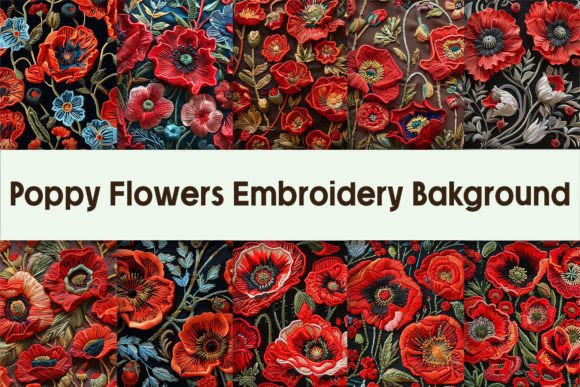
The title Poppy Flowers Embroidery Bakground immediately suggests a natural, organic aesthetic. For a small business owner—whether running a boutique florist shop, a handmade candle brand, or a cozy café—this design offers a blend of elegance and rustic charm. The inclusion of ten high-resolution PNG files at 4000x4000px indicates that these are substantial assets, not afterthoughts. From a visual standpoint, poppies are bold flowers with strong silhouettes, which generally translate beautifully to embroidery because they have clear focal points.
However, as a background element, the challenge lies in balance. Does it overpower a logo? Is it too busy for a subtle chest patch? Based on the description, these files are positioned as versatile design assets suitable for various applications. They feel friendly yet premium, making them ideal for brands that want to convey warmth and artisanal quality. If your brand identity relies on clean lines and minimalism, you might find this design too decorative. But for businesses aiming for a handmade product feel, such as a craft studio or a local bakery, the floral motif adds immediate value and personality.
Real-World Business Applications
In my experience, the true test of any embroidery file is its versatility across different merchandise types. Here is how Poppy Flowers Embroidery Bakground could function in real-world scenarios:
- Embroidered Patches: These designs can serve as standalone badges or accents. A circular patch featuring a poppy cluster works exceptionally well for denim jackets or tote bags, adding a touch of color without overwhelming the garment.
- Staff Uniforms and Aprons: For a café or restaurant, subtle floral accents on apron pockets or sleeve cuffs can reinforce a fresh, natural brand vibe. The high resolution ensures that even if the design is scaled down, the details remain crisp.
- Cap Embroidery: While complex backgrounds can be tricky on curved surfaces, simplified elements of the poppy design can work beautifully on the front panel of caps, especially for outdoor brands or creative agencies.
- Tote Bag Design: Canvas totes are a staple for Etsy sellers and market vendors. Using this background as a full-panel print or a large embroidered section creates a statement piece that customers are proud to carry, effectively turning shoppers into walking billboards.
- Product Packaging Accents: Beyond clothing, these digital embroidery file assets can be used to create printable mockups or actual fabric labels sewn into packaging, elevating the unboxing experience for online buyers.
This flexibility makes the asset valuable for small business merch where consistency across multiple product lines is key. Whether you are launching a new line of branded hats or refreshing your staff’s look, having a cohesive floral theme helps establish a memorable brand identity.
Where to Exercise Caution
No design is perfect for every application. As a professional, I must highlight areas where Poppy Flowers Embroidery Bakground requires careful planning to avoid production issues:
- Small Patch Sizes: If you intend to embroider this on very small patches (under 2 inches), intricate background details may become muddy. Fine lines and delicate petals can merge together, losing their definition. It is best suited for medium to large formats.
- High Stitch Density: Background fills often require dense stitching to cover the fabric completely. On lightweight fabrics, this can cause puckering. Always ensure you are using the correct stabilizer to support the weight of the thread.
- Dark Uniforms: If embroidering on dark-colored garments, light-colored poppies may lack contrast unless you use a heavy underlay or white backing. Test this thoroughly before committing to a large run.
- Fabric Texture: Highly textured fabrics, like thick wool or rough linen, can obscure fine details. Smooth cottons, poly-cotton blends, and canvas are the safest choices for maintaining clarity.
- Curved Surfaces: While caps are popular, complex backgrounds can distort around the curve of the head. Simplify the design or place it on flatter areas like the back or side panels if distortion is a concern.
Impact on Brand Identity and Customer Trust
Investing in quality embroidery is an investment in perceived value. Customers associate well-executed stitching with durability and attention to detail. When a customer sees a professionally embroidered poppy design on a tote bag or apron, it signals that the business cares about craftsmanship. This enhances customer trust and recognition.
Furthermore, visual consistency is crucial. If your website, social media, and physical products all feature similar floral motifs, you create a cohesive brand narrative. Using Poppy Flowers Embroidery Bakground across your custom apparel and marketing materials reinforces your niche, whether that is botanical beauty, rustic chic, or artisanal goods. This consistency drives buyer engagement by making your brand instantly recognizable in a crowded marketplace.
Practical Designer Notes for Production
Before you send these files to production, follow these essential steps to ensure a successful outcome:
- Test in Black and White: Convert the design to grayscale to check contrast and composition. If it doesn’t read well without color, it may struggle in thread.
- Check Hoop Size: Confirm that your intended hoop size accommodates the largest elements of the design. Scaling up too much can lead to excessive digitizing errors.
- Review Thread Colors: Analyze the thread colors against your target fabric. Poppy reds and greens need sufficient contrast to stand out. Consider using metallic or variegated threads for added texture if appropriate for your brand.
- Inspect Spacing: Ensure there is enough negative space between elements to prevent thread breaks and tangling during machine execution.
- Create a Printable Mockup: Use the included PNGs to create a printable mockup for client approval. Seeing the design on a virtual garment helps visualize the final result and catch potential issues early.
- Confirm Commercial Licensing: Although the product description mentions usage for POD and graphic design, always verify the specific terms for commercial embroidery. Some licenses restrict the number of items you can produce or require attribution.
- Test on Real Fabric: Never skip the sample run. Stitch the design on the actual fabric type you plan to use. This reveals how the finished product feels and looks under real conditions.
In conclusion, Poppy Flowers Embroidery Bakground is a versatile and visually appealing asset for small business owners looking to elevate their merchandise. By understanding its strengths and limitations, you can create stunning embroidered patches, apparel, and accessories that truly reflect your brand’s unique story.